corporation: whelp this foods not legally allowed to be sold anymore, guess i’m tossing it into the trash
corporation: but first i gotta pour bleach all over this food i cannot legally use anyway
me: how is that efficient or helpful in anyway????
corporation:
“If we don’t poison or tamper our discard then homeless people will eat it”
Aaaand?
“If they eat the discard they won’t buy the fresh stuff! It’s bad for business!”
…. You know homeless people can’t afford to buy your fresh stuff though, right? If anything you’re just encouraging them to shoplift your fresh stuff because the free alternative is covered in chemicals. That’ll cost you more in lost product as well as the money spent on bleach. You know, basic math.
“Huh? I couldn’t hear you over your satan-worshipping communism.”
Corporations literally take scissors to their clothing merchandise (that’s been returned or slightly damaged) so that poor people aren’t walking around with their lables. That amount of waste should be illegal.
The only minimum wage argument from the anticapitalist left should be “if your economic system fails when people’s basic needs are met it deserves to fail”.
On a global scale, if corporations are forced to raise their wages, they’ll raise prices, cut costs elsewhere, and dive deeper into economic imperialism. This is not a flaw, but a result, of capitalism. It’s not avoidable or excusable.
Whether or not prices have to go up does not matter. Pricing shouldn’t determine survival.
Capitalism is like whack-a-mole: You raise wages somewhere, corporations and governments push them down somewhere else and outsource production there to cut costs. ~80% of the world lives in poverty. At what point do your arguments for raising wages reach the source of the issue ?
If your economic system fails when people’s basic needs are met it deserves to fail
we all know capitalism is fucking evil but one of my favorite stories to tell from Retail Hell is that time my district manager got annoyed that 2 poor people were taking food out of the dumpster occasionally so he told us all to start pouring bleach over all the items we threw out so people couldn’t use them/it would hurt them if they touched it directly. never did that and absolutely have participated in “employee theft” by stealing bags of food from the dumpsters to donate to the local food bank but like. he really did just want us to directly harm people over food that was already in the literal trash.
when managers and CEOs get up in arms about “employee theft” they’re actually talking about people like me who don’t throw out the 30 pairs of shoes that we weren’t able to sell and instead bag them up and throw them behind the dumpster for retrieval/donation later. I once took home $450 of food and another night got $500 worth of makeup. Perfectly good electronics get thrown away bc the packaging was tampered with. We throw away food, cosmetics, and household products 30-60 days before their expiration dates (which are also kinda bullshit anyway). The whole retail model is structured around this idea of massive waste.
this is why old ppl never realize what they’re saying when they say “when i was your age i payed for my tuition all by myself” yeah well sorry susan my tuition is $35,000 a year and i make $7 an hour
So there’s been a lot of discussion floating around regarding billionaires and society, and I’ve noticed that most people have no idea what a billion dollars is for practical purposes – people tend to think of it as a vague, nebulous concept of “a lot of money” rather than something concrete you can wrap your head around. This is understandable, considering 1) a billion of anything is really hard to visualize and 2) the average person has no real reference point for an amount of money that large. So I’m going to try to break it down for everyone:
Okay, so imagine you have a billion dollars. What can you actually buy with that?
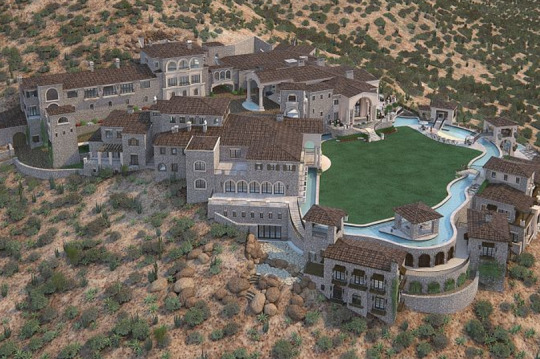
This is a mega mansion that will have an Imax cinema, a bowling alley, and a spa when it’s fully complete. It costs around 4.6 million dollars.
Now let’s buy one of these in every country in Europe – that’s 50 mansions you now own. So how are you going to travel between all your many homes?
This is a Bugatti Veyron Super Sport, the fastest street-legal car in the world. It has a maximum speed of a face-melting 254 mph and can go from 0 to 60 mph in 2.5 seconds. It costs around 2.5 million dollars.
Let’s buy a dozen of them – you know, in case you total a few of them racing around the highway. But maybe a sports car is still to slow for you:
This is an Embraer Lineage 1000. It’s private jet that can seat up to 19 passengers, and we’re going to buy it for 53 million dollars.
How about a boat? The Tatoosh is a 303 ft private yacht, meaning it’s longer than a football field. We’ll take it for 369 million dollars.
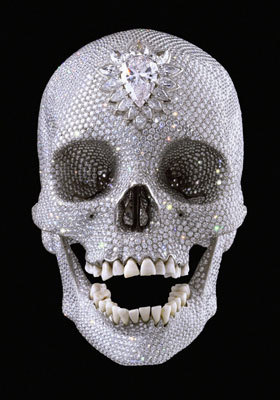
Now that we’ve gone on our ludicrous and absurdly wasteful shopping spree, how much money do we have leftover? About 12 million dollars, which is almost an order of magnitude more than the average American with a bachelors degree or higher earns in a lifetime ($1.8 million). So if you for whatever reason decided to buy the 50 houses, 12 sports cars, plane, yacht, art pieces etc. and immediately set them all on fire, you would still have enough cash leftover so you never would have to work again if you so chose. This is what it means to be a billionaire.
But we’re not done yet.
The richest person in the world is Bill Gates, with a net worth of 86 billion dollars. If he liquidated his assets, what could he buy?
Well, for starters, the Burj Khalifa – the tallest man-made structure in the world at 2,722 feet tall, costing around 1.5 billion dollars.
The Large Hadron Collider, the world’s biggest and most advanced particle accelerator for 9 billion dollars.
The Hubble Space Telescope for 10 billion dollars (including 20 years of operating costs).
The Three Gorges Dam, the largest power station in the world, more than a mile wide.
And to top it all off, a fleet of five Nimitz-class aircraft carriers, the largest military vessels ever built for around 8.9 billion dollars each. If you look at the picture very closely you can see the people standing on it for reference.
If Bill Gates bought all of this, he would still have around 2.3 billion dollars leftover. That’s enough to go on the billionaire shopping spree I described above twice over (so 100 mansions, 24 sports cars etc.) and still have hundreds of millions of dollars in the bank when it’s all said and done.
But we’re not done yet.
Currently, it’s estimated that there are 2,043 billionaires alive today, with a combined net worth of around 7.67 trillion dollars.
This is Russia, the largest country in the world, extending more than six and a half million square miles, with a population of more than 144 million people. The United Kingdom could fit inside Russia 70 times.
In 2016 Russia’s gross domestic product was about 1.28 trillion dollars. This means that if the two thousand and some odd richest people in the world – less than half of 0.1% of 0.1% of the Earth’s population – liquidated and pooled their assets together, they could buy every single product and service made in Russia for almost 6 years.
So yeah, make of that what you will.
Let this sink in next time someone tells you capitalism allocates wealth according to contribution. It’s empty ideology meant to shield billionaires from a revolutionary redistribution of wealth and power.









 Procrastination Station