“Should I lick the science?” forensic science edition: look, if you have to ask, you’re in the wrong line of work.
“Should I lick the science?” sociology edition: the IRB really won’t like that even if your subject thinks it’s kind of hot
“Should I lick the science?” vulcanology edition: part of me really wants to see you try
“Should I lick the science?” gynecology edition: ……….I mean. Definitely not in a professional context, but recreationally…? I’m sure it’ll be appreciated.
“Should I lick the science?” epidemiology edition: that is how you become the science
“Should I lick the science?” astrology edition: what science?
“Should I lick the science?” criminology edition: what, like there aren’t enough problems with the criminal justice system already? come on.
“Should I lick the science?” hematology edition: if this is your only way to acquire sustenance without violence, then I suppose I can’t judge. go ahead, but be mindful of mirrors.
one of the most important things ive learned from upper level biology education so far is that dna isnt the god-like all-powerful beacon of similarity between all living beings on the face of the earth as high school science textbooks will lead u to believe but actually is, in fact, the molecular equivalent of a smoldering dumpster fire that’s in a constant state of chaos and cellular scandal like some highlights:
-the parts of dna that just casually detach on a physical level from the main strand, do some sick skateboard tricks in the cytoplasm, and land somewhere else with 43552342 copies
-the parts that would do A Thing if they wern’t physically spooled up so tightly that the Make Thing Happen machinery couldnt get to them
-the dna thats in ur mitochondria bc the mitochondria used to be a bacteria that our bigger, buffer cellular ancestors just vored in the primordial ooze
-the dna that’s in chloroplasts in plants for the same reason
-rna….bitches be crazy like what is she gonna do next?? o she gonna act like a protein now and do shit?? im on the edge of my seat
-sometimes u just gotta make more chromosomes man like sometimes u just be hanging out and u gotta make ur genome 64 sizes larger and then change ur mind only 100,000 years later and delete half of it and thats just how it is on this bitch of an earth
-random shit from like 5 BCE is just casually left over everywhere like no susan i told u to leave that gene alone we might need it to fight dinosaurs again u just never know!!!!!
dna is earth’s biggest and brightest train wreck and honestly i wouldnt trust a dna molecule to water my plants let alone run my body but here we fucking are
I am feeling physically very unstable after reading this.
I’m a genetics professor and everything here is true.
There’s a fern that has 1,260 chromosomes. That’s 630 pairs of chromosomes. No, we don’t know why.
Oh, and everyone should know that the person who first presented evidence for endosymbiosis (the official name for cells eating each other and then turning into mitochondria or chloroplasts instead of being digested) was this woman, Lynn Margulis, in 1967:
Her paper where she presented the theory was rejected 15 times before it got published. Over the next decade, her work was mocked and ignored. Now every biologist knows that she was right.
The bits of DNA that move around (“jumping genes”) were discovered by this woman, Barbara McClintock, in the 1940′s:
Her work on them was ignored and derided for about two decades before some people started to take it seriously. In 1983 she won a Nobel Prize for it.
Something of a derail, but I feel strongly about talking about the contributions of these two women.
it’s never not the time to learn about cool women in science
So this official poster has been released for How To Train Your Dragon 3 and it has left me with… opinions.
My first initial reaction was excitement! Oh hell yeah HTTYD 3 is coming out! I adored the first two! But then i saw…
SIIIIIGGGGGGGHHHHHHH I knew immediately that this was most likely a female night fury and fuck yeah shit fuck it is which is so disappointing. I could write a huge essay on how female characters are portrayed in media. I could write a massive blog about smurfette syndrome and how female characters are always just a pink, soft version of their male counterparts, or how female animal or anthro characters still have to fall into society’s beauty standards so we do crazy things like give ducks tits or large eyelashes.
I COULD talk about why these things occur, and how this is a worrying reflection of how society views human females, that males are the default and females are the other… but I’m not going to do that TODAY.
Hi my name is India and not only do I have an animation degree, but I also have a degree in animal and veterinary science.
This design doesn’t just insult me as an animator. This design insults me as a scientist.
so uhhhhhh i know this is a plant blog but realtalk lads im a little freaked out by that wild ass new organ discovered in our bodies according to a paper published literally yesterday am i right my lads, my bois, lmao hhaha
(as of 3/28/2018, paper was published in the reputable international research journal “Nature” on 3/27/2018, publication here, study was started in 2013) ok so like uhhh this is my rough translation of the paper they published using my current level of biological knowledge, if anyone else has a more in depth understanding with human anatomy things and would like to add on with anything i might have missed feel free to add but this is my takeaway:
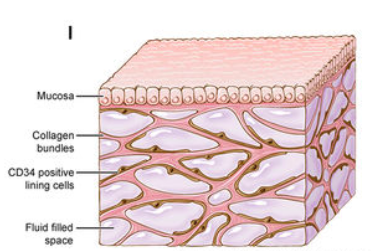
-scientists were looking at some stuff in the inside of a bile duct they were studying in a live patient (this will be important later) using a laser that lets them see the cells in real time. they injected some stuff into the duct and saw the spaces inbetween the cells fill up with fluid in strange, tube-like structures that didn’t correspond with what they expected to be there, so they sectioned and froze them to study them closer; they realized that upon closer inspection, the fluid-filled places were VERY small collagen tubes forming a complex matrix of bundles surrounded by a weird cell covering that seemed to connect them to one another. they called this the Interstitium.
-they sectioned some more places where squeezy things might happen, like the inner linings of the bladder, lungs, lymph nodes, and the soft tissue enclosing our muscles, filled them with the same indicator, and hyper froze them like they did to the first sample and found the same weird matrix of fluid-filled tubing:
they concluded from what they found from this that:
1. our previous thought of the space inbetween the cells in these parts of the body, which we thought were just kinda like, there or whatever doing nothing (a series of spaces that were already called the Interstitium that were largely ignored), are actually full of complex tubing running through a ton of very important parts of your body
2. when the structures they’re chilling around (like your bladder and bowel) contract, the fluid moves around all weird
3. the reason this wasn’t discovered before is because when the tubes are squished too hard- like when scientists are cutting into them- they have a tendency to collapse really easily,especially when being treated with chemicals for microscope use, giving the impression of the kind of tissues that we’ve traditionally seen in specimens and thought of being in these sensitive areas (closely compact and dense cell mats). it turns out that in living people, these tubes run between the cells carrying fluid; the scientists were able to see this initially in live patients using the above mentioned laser technology, and then took live biopsies by quickly freezing the cells in place before removal to prevent their collapse.
4. yes, these can move cancer cells around, which is HUGE seeing as they seem to enclose a LOT of important and delicate muscles in our bodies in one giant, complex system. when they looked at it in cancer patients, the tumors they found seemed to kind of be….leaking….into them…..because the tumors were putting pressure on the fluid tubes….which easily collapse…..and move things that fall into the fluid around….
5. the scientists also explored things like hernias and colon damage in relation to these, but unfortunately this is where my translation powers run out as non-plant-related terminology starts being used lmao im so sorry im like this
tl;dr: the membranes that surround some really important parts of squishy things like our stomach, bowels, colon, lungs, muscles, etc are full of very delicate and complex tubing that runs in a weirdly complex system to other important squishy things throughout our bodies and looks like a weird organ that we didn’t know was there before (or like, we knew about it, we just didn’t know it was so…connected and uh…organy). also it seems to have an impact on the spread of cancer throughout these regions
Graduate of Biomedical Science here; this paper is pretty much understandable to me.
You’ve picked out the main stuff, but here’s some things I think is very interesting:
The discovery of these spaces dramatically expands the lymphatic system. Basically, this is how the lymph nodes are connected to the rest of the body. Before it was kinda like ‘yeah here are the lymph nodes, and the lymph fluid kinda goes to the somehow? idk’. But now we have a whole system. It’s like discovering the entire circulatory system when before you only had the heart to work with.
This is super important for cancers and detecting when a cancer has spread (metastasised, in the lingo). They talk about the spread of cancers into the deeper tissues (such as stomach cancers invading their submucosal tissue and skin cancers pentrating deeper into the dermis layers), but what is most important is that they detected the cancers spreading into the interstitial spaces before there was anything to detect within the lymph nodes. This is super important, as usually lymph node biopsies are done to detect if a cancer is spreading; this is before that very stage. This is literally catching cancers in the act of spreading before they’ve hit another organ this is fucking incredible.
It’s providing an explanation for oedema (or edema, for my US followers), which is the build-up of fluid in certain areas of the body (usually the lower limbs, but it can be anywhere). For so long it’s been like ‘I guess there’s something wrong with your blood vessels??’ but like the lymphatic system, we’ve now got another explanation. ‘Ah, okay, there’s something going down in your interstitial fluid!’ A more effective diagnosis and treatment could be made, Bam! Enrich more people’s lives.
They may play a role in how scar formation works. Some scar tissue can get a bit crazy and grow too much, meaning it needs to be cut away as it hinders movement or it just fucking painful. Perhaps the interstitial tubing/fluid plays a role in this, considering collagen is used in scar tissue, and these spaces are full of it.
There’s clearly communication between these spaces and the digestive system, as they found tattoo pigment from the intestines in these spaces. Tattooing in the intestine is done to mark lesions for removal or observation later on, so the fact this pigment is actively moving out of the digestive system and else means it could play a role in disease we don’t know much about, like inflammatory bowel conditions.
Basically, THIS IS FUCKING HUGE AND COULD POTENTIALLY CHANGE THE GAME IN A BIG WAY.
Thank you OP for sharing this, I haven’t nerded out and been so fascinated by a study in a long time.
ALSO GOOD ON YOU NATURE FOR MAKING THE FULL ARTICLE FREE. HONOUR ON YOU AND YOUR COWS.
The vaccine was pulled from the market, despite evidence finding it was safe
Lyme has quickly become one of the most common infectious diseases in America, with many as 300,000 people infected every year. And public health officials fear the bacterial infection, which jumps from ticks to humans, will only spread farther and faster as climate change makes more parts of the US habitable for ticks.
Lyme can be treated with antibiotics. And there are many ways to prevent tick bites. But there’s no vaccine available if you want extra protection against the disease (unless you’re a dog).
Yet in the late 1990s and early 2000s, a vaccine called LYMErix was sold to prevent between 76 and 92 percent of infections. Hundreds of thousands of people got it — until vaccine fear knocked it off the market.
The LYMErix story is worth retelling today. It’s a stark reminder of how anti-vaccine mania of the past few decades is leaving us all more susceptible to disease.
The Lyme vaccine was effective Lyme first appeared in the US seemingly out of nowhere, spreading between ticks and people in Connecticut.
By the 1990s, it was possible to be infected with Lyme from a tick bite in much of the northeastern US — and there were around 15,000 confirmed cases a year. (Today, there are more than 35,000 confirmed or probable cases of Lyme each year and many more cases that go completely unreported.)
Recognizing the increasing public health hazard, the drug manufacturer SmithKline Beecham (now called GlaxoSmithKline) developed a vaccine that targeted the outer protein of the bacteria that causes Lyme. The Food and Drug Administration approved it in 1998.
The vaccine worked by targeting the bacteria while it was still inside the tick’s body, the website History of Vaccines explains. The bacteria would be neutralized before the tick ever had the chance to transfer the bacteria into the human body.
LYMErix wasn’t a perfect vaccine, as Gregory Poland, a Mayo Clinic vaccine researcher, explained in a 2011 retrospective in the journal Clinical Infectious Diseases. It required three doses over the course of the year, and was not approved for people under age 15. It was optional, and doctors had a hard time assessing whom to recommend it to (there were few maps of Lyme-carrying ticks’ range at the time). And the vaccine only protected against the North American strain of Lyme. Finally, it was somewhat expensive at $50 a dose, and it was not universally covered by health insurance.
But it was effective, preventing Lyme in up to 90 percent of the people who were vaccinated will all three doses, with few side effects. And at first, the vaccine was pretty popular; about 1.5 million doses were injected before 2000.
Another way science-rejecting dimwits hurt people.







 Procrastination Station